Bridging finance is short-term, secured, expensive lending used to fund property deals that traditional mortgages can't touch — un-mortgageable refurbs, auction purchases, chain breaks, BRRR cycles. Used well it unlocks deals other investors can't do. Used badly, the interest eats the profit. Here's the practical UK guide.
What bridging actually is
A bridging loan is a short-term loan (typically 3–18 months) secured against UK property. The lender's underwriting focuses on the property and the exit strategy, not on monthly affordability — which is why bridging completes in 2–4 weeks rather than 8–12.
Bridging comes in two flavours:
- Regulated bridging: when the property is (or will be) the borrower's home. FCA-regulated.
- Unregulated bridging: for investment properties, BRRR, flips and commercial deals. Most property investor bridging is unregulated.
How much it actually costs
Headline pricing in 2026:
- Interest: 0.55–1.0% per month (6.6–12% annualised).
- Lender arrangement fee: 1.5–2.5% of loan amount, added to the loan.
- Valuation fee: £400–£1,500.
- Lender's legal fees: £750–£2,500 + your own legals.
- Broker fee: 0–2% (often built into the rate).
- Exit fee: increasingly rare, but check.
On a £150k bridging loan over 9 months at 0.85%/month with a 2% arrangement fee: £3,000 arrangement + ~£11,475 interest + £2,000 in valuation and legals = ~£16,475 finance cost. That's the number that has to fit your deal economics.
How interest is charged
UK bridging interest is usually structured one of three ways:
- Serviced: you pay interest monthly. Cheapest headline rate but requires monthly affordability.
- Rolled-up: interest accrues and is paid in full at exit. No monthly cost but the loan grows.
- Retained: the lender deducts the full expected interest from the loan amount on day one. Common for refurb deals where there's no rental income yet.
Net loan vs gross loan
When bridging makes sense
- BRRR refurbs: the property isn't mortgageable until refurb is complete; bridging funds the purchase and refurb, then a BTL mortgage refinances out.
- Auction purchases: 28-day completion is impossible on a standard mortgage; bridging completes in time.
- Chain breaks: you've found your next house but your buyer's pulled out — bridging buys the new house and you sell the old one over the next few months.
- HMO conversions: the property may be un-mortgageable as a single let until conversion is complete.
- Below-market opportunities: a motivated vendor needs speed; bridging gives you a 3-week completion.
When bridging is a trap
- When your exit isn't certain. If your refinance might not complete in time, the bridging interest keeps rolling at 1%+ per month, often jumping onto a higher default rate beyond the term.
- When your stress-test maths doesn't pass at the BTL stage. A bridge with no viable BTL exit is just an expensive way to buy a property you can't refinance.
- When the deal margin is too thin. £20k of bridging cost on an £18k profit margin means you've worked for free at best.
- When you don't have contingency cash. Refurb over-runs, tenant find delays and refinance valuation surprises all chew time, and time costs interest.
Cost out a specific bridge
Model the full bridging cost — including arrangement, retained interest and exit — for your deal.
The exit strategy is the deal
Lenders only care about one thing: how the bridge gets repaid. Spell it out before you apply:
- Refinance: onto a BTL mortgage. Most lenders need six months' ownership before they'll lend on uplifted value, so plan a 9–12 month bridge.
- Sale: for flips. Always model 6–9 months, even if you "expect" to sell in three.
- Cash: rare but cleanest if you have it.
How to pick a bridging lender
Bridging brokers earn their fee — the market is fragmented and rates vary by 50–100 basis points for the same deal depending on where you go. When comparing offers look at:
- Total cost over the expected hold, not just the rate.
- Default rate after the term ends.
- Whether interest is serviced, rolled or retained.
- Speed of decision (some lenders genuinely complete in 2 weeks; others take 6+).
- Reputation for actually completing — some quote sharply and pull at the last minute.
Tax treatment
Bridging interest on an investment property is a deductible cost against rental income (subject to Section 24 for individuals). On a flip, finance costs reduce the trading profit. Always keep arrangement fees, broker fees and legals — they're all deductible.
Bridging pairs naturally with BRRR and with the deal analysis framework — never use it without modelling the exit through both.
Get new UK finance and property guides from Money Tools UK
Plain-English UK finance insights, tax updates and property investing guides.
Related calculators
Bridging Finance Calculator
The exact calculator this article is built around — open it and run your own numbers.
Open calculatorFrequently asked questions
Related guides
More flagship guides and tools from Money Tools UK.
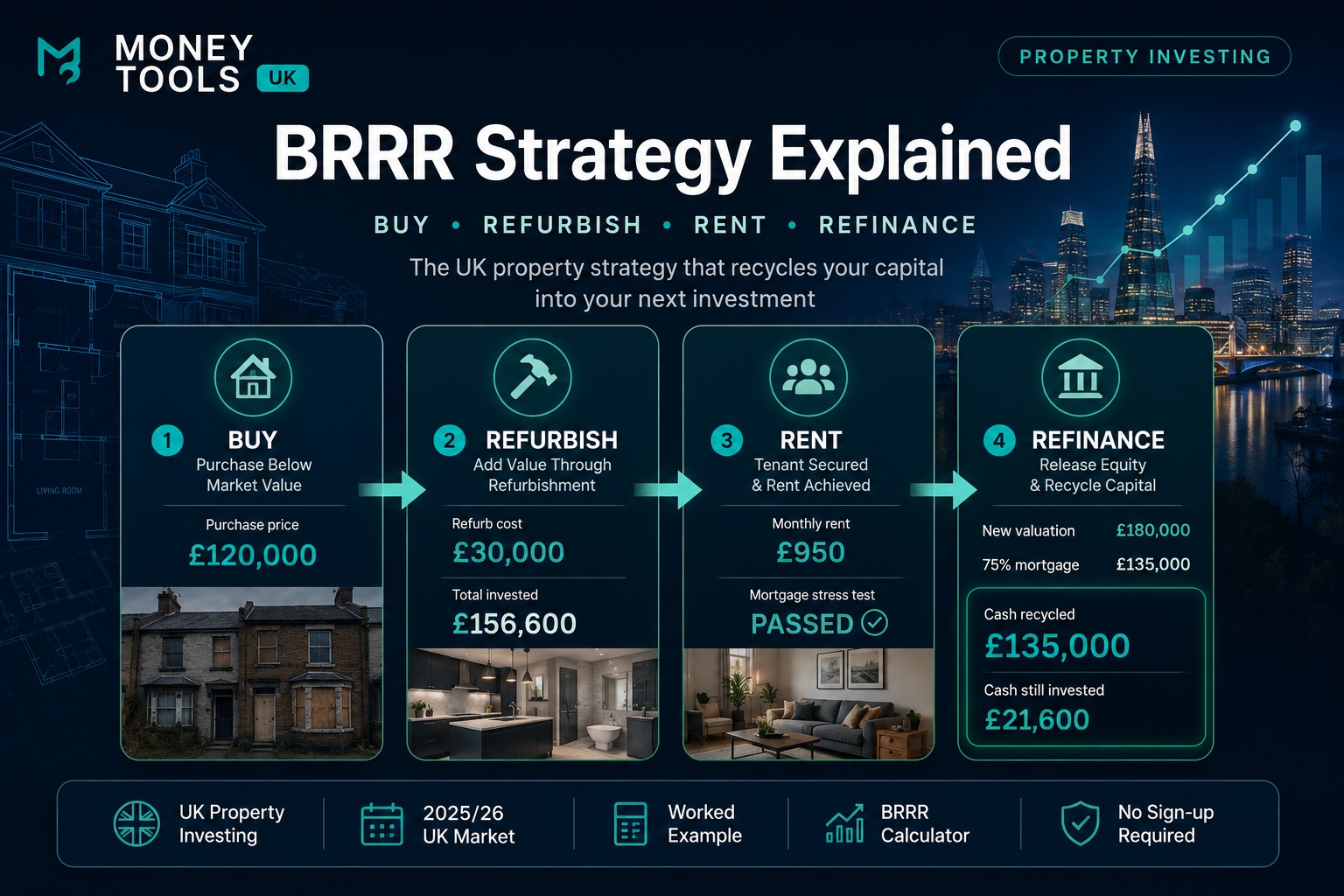
How the Buy, Refurbish, Rent, Refinance (BRRR) strategy works in the UK — including funding, refurb costs, refinance pitfalls and a worked example.
Read guide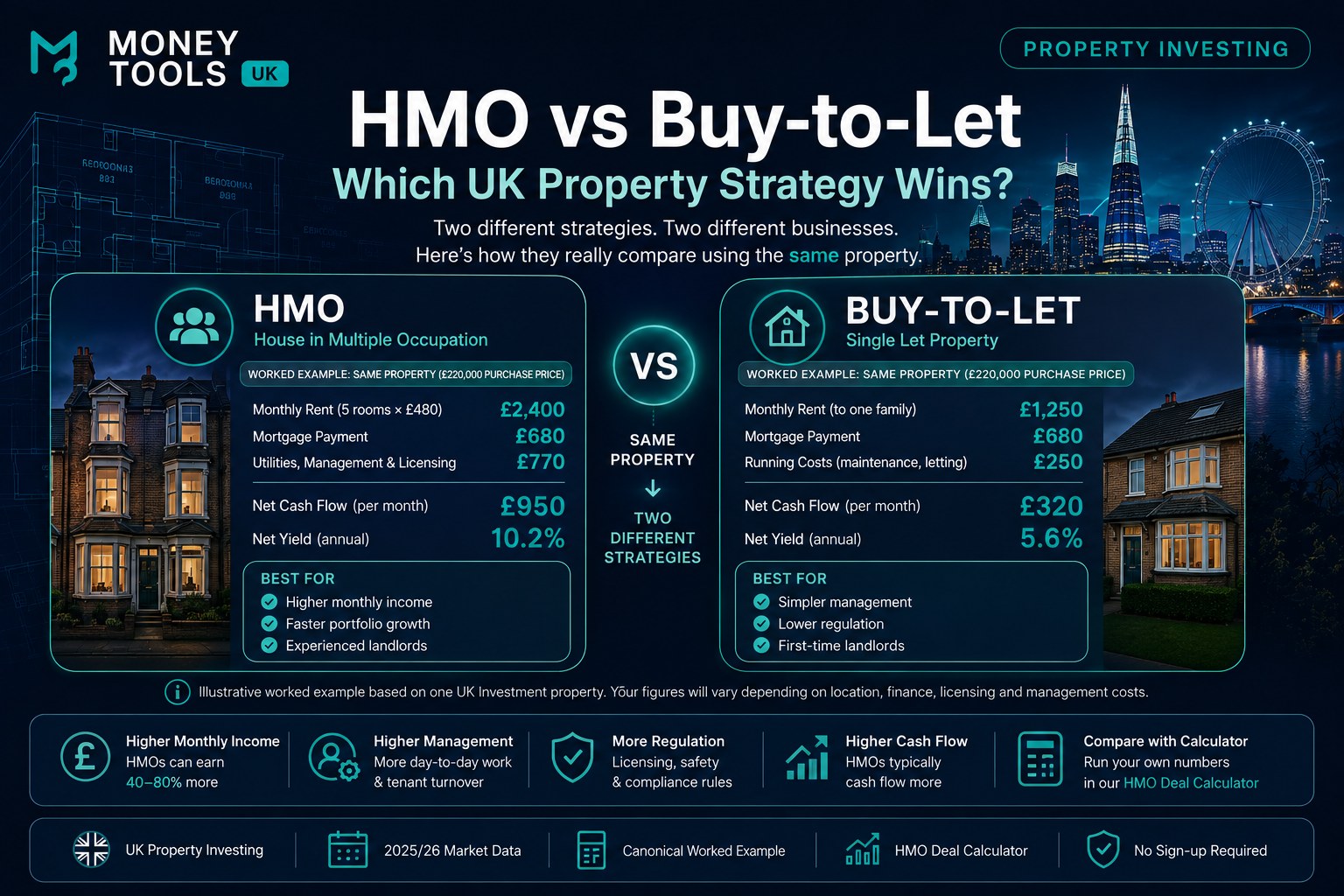
Compare HMO investing with single-let buy-to-let on yield, void risk, regulation, mortgages and management workload across the UK.
Read guide
A repeatable framework for analysing UK buy-to-let, HMO and flip deals — purchase, refurb, finance costs, cash flow and ROI.
Read guideDisclaimer: This content is for informational purposes only and should not be treated as financial, tax, mortgage, investment or legal advice.